Wednesday, August 1, 2012

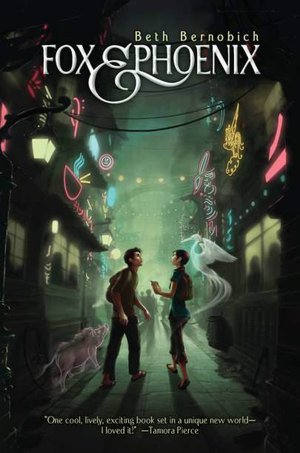
The Pearl


"It is not good to want a thing too much. It sometimes drives the luck away.
You must want it just enough, and be very tactful with God, or the gods."

John Steinbeck's The Pearl is based on an Indian Folk tale and explores the nature of man as well as delving into the topic of race. He shows us the importance of community and even songs. And he shows us how something made for good can lead to your destruction, how good intentions can turn to greed. It's really a beautiful story [as well as a quick read at under 100 pages!] and I highly recommend it! 

Travels with Charley: In Search of America

"A journey is a person itself; no two are alike"

I promised you Steinbeck, so here we go! 

Right off the bat, I knew I would like the tale of Steinbeck's journey across America.
The old owner wrote: "We see things as we are, not as they are."
Truth. Beauty. Steinbeck. 

Steinbeck drove across the country [starting in the north-east] because he "needed to discover all of America." He got himself a travel truck and named it Rocinante after Don Quixote's horse, which implies Steinbeck likens himself to Quixote. He is to travel alone with only the company of his poodle, Charley. He even left his wife at home, with only a mild break, from both his travels and his loneliness, in Chicago when the wife flew out.

Steinbeck had some really interesting insights in America. He writes: "Yellow Stone National Park is no more representative of America than is Disneyland." I can't say that I agree with Steinbeck's assessment that they are not representative of America, because I think that they both are representative of America and it's people, especially of tourism and travel, but also the things we as Americans like. 

Steinbeck also feels that American's have no roots. This is because we are descended from people without roots. The very people who founded America left because they didn't have roots, and so we are a rootless people. Those with roots stayed where they were. I'm not sure how I feel about this assessment, though he makes a good argument for his position. 

On his way back home, Steinbeck first travels through the South. Now, remember, this was 1960, so he encountered some unique perspectives on race, from both directions. In order to see these perspectives, he never revealed what exactly he thought. 

The end of his journey kind of fizzled out, and the book definitely reflected this of Steinbeck. It was just like he ran out of gas. He was tired. He was ready to go home. There was no real conclusion. It was just a journal of his experiences and loose interviews as he journeyed across this "New America" which did not live up to his expectations. This may be, at least in part, because of Steinbeck's age and heart condition. Thom Steinbeck, John's son, gives that as the reason for the trip in the first place. John wanted to see his country one last time, and Thom was a little surprised that the wife let John go on the trip alone because of his condition. Thom says he could have died at any time. This heart condition would have definitely come into play in Steinbeck's growing tired and wanting to come home.

Now, many folks find Travels with Charley to be a work of fiction, and maybe it is. Or maybe, in my opinion, Steinbeck is recounting his experiences, his truth. Maybe it didn't happen exactly as he said it did. Maybe he was an old man waxing sentimental about the country he loves. But we must take all memoirs or personal tales with a grain of salt! And this was a fairly enjoyable one, with just a titch of dry parts. So, you know, a regular memoir. I jest. But I do recommend this book if you love memoirs, Steinbeck, or America. 
Read on, my friends. 
Tuesday, July 31, 2012

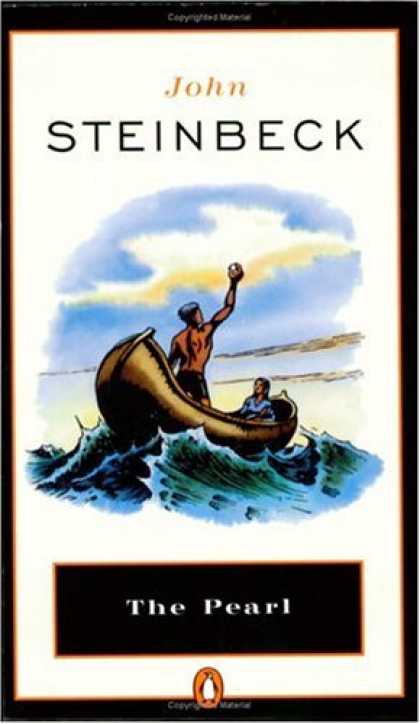
Fox and Phoenix


So I started reading fox and Phoenix by Beth Bernobich, and I was a little lost, right off the bat. So I'm like, okay, it's a fantasy novel, I'll give it some time. But it just never kicked in. I was halfway through the book and I didn't understand anything. It was super scattered and everything was new and nothing was explained as far as her invented terminology and world, and there were references to a past adventure of sorts. So I start to think, "Hey, did I pick up a sequel?" and scan the cover. Nothing. The back of the book. Nothing. Look inside the book. Front flap. Back flap. Also written by. Nothing!! So I gave up. I didn't like it and I didn't understand it because I didn't know this world. Then internet research let me know that it is a sequel. TO A SHORT STORY PUBLISHED ONLINE. For real? Maybe do a better job of letting people know next time you write a book, Beth. Cuz this was just lame. 

Monday, July 30, 2012

Steinbeck's Ghost


Steinbeck's Ghost is a cute YA novel about a young boy who lives in California, near the John Steinbeck house as well as the Steinbeck library. The library is going to close, and it's up to him, and his fellow library patrons, to save the library!  Buzbee makes lots of Steinbeck references, which is neat if you're a Steinbeck aficionado, but makes a narrow demographic for a young adult novel. That is, of course, unless his goal is to encourage today's youth to delve into Steinbeck, but it's really too specific with certain novels. I really can only recommend this book if you love, and are well-read of, Steinbeck. However, it did encourage and inspire me to read more Steinbeck! So look forward to new Steinbeck posts from me! 

The Last Days


More of a companion novel than a sequel to Peeps, The Last Days tells the story of new characters: Moz, Zahler, Pearl, Alana Ray, and Minerva, as they form a band in apocalyptic New York. The vampires from Peeps continue to occur, under the guise of them going mad, the sewers are gushing black water, and the earth is shaking. Randomly, it reminds me of the Duck Tales episode when they're in the Bermuda Triangle. Overall, I had similar feelings for The Last Days as I did towards Peeps, but with the additional sex and language in this it's much more of an older YA novel than, say, a middle school YA novel. So, don't expect too much, but no need to hate. 
Peace out!

Friday, July 27, 2012

The First Princess of Wales


After I read The Irish Princess, I thought it would be worth it to look into more books by Karen Harper, and I found The First Princess of Wales. I thought it sounded super neat! An earlier time period than I've read and new characters; I'm always up for that! So I checked it out from the library and started reading it, when I realized that the original title was Sweet Passion's Pain. If I had known that in the first place, I don't know that I would have picked up the book. It sounds a little like a harlequin novel! But I was already into the book and liked it so far, and it didn't seem naughty, so I kept reading. 

The First Princess of Wales is a historical fiction set in medieval times about a young girl, Joan of Kent, who is brought to Queen Phillipa's court and meets and falls in love, and lust, with Edward the Black Knight, Prince of Wales, who returns her lusty feelings, and perhaps her love. However, the Queen and King do not find Joan to be a suitable match for their son and she is quickly married off to someone else., despite the fact that Edward and Joan have become lovers and intend to stay that way. [Their lovemaking is not described in awkward detail.] It felt a lot like that game we used to play: Do, Date, or Marry. Or was it Do, Dump, or Marry? Either  way . . .

This novel just didn't read the way I thought it would. It wasn't what I thought it would be. [I also came into the novel thinking it was about the York/Lancaster split. My bad! But I'd love to read a book like that if anyone knows of one!] What I thought would be at least the middle, if not earlier, was the end! It took so long to get there, and then there was nothing after! I wanted to read more and was disappointed that it was already over. If I wasn't so determined to finish the book though . . . it's just that Harper's books take soooo long to read! They draaaag on and on! Both of hers that I've read have taken me much longer than I would have though given the number of pages and subject matter. I feel like I should like her work, but I just really don't. I kept finding myself thinking that it would have been more exciting if Philippa Gregory had written it. She's much more of a captivating author. Gregory also includes a family tree when necessary, which Harper didn't. I really needed one, because Joan and Edward are related, probably third cousins given my reading, but sometimes they talked and made it sound like a much closer relation. A family tree would have been helpful. Gregory, as most historical fiction writers, also adds an author's note or a historical note at the end to explain what was truth and where liberties were taken. Harper did no such thing. So I went to my easiest and closest resource: Wikipedia. And Wikipedia makes Joan sound so much more interesting than the book ever did!  It talks about her plotting to get even with the king for her fathers death, as does the back of the book, but that was hardly present compared to her pining over Edward and their illicit rendezvouses!  Harper clearly took liberties with her characters, especially their ages in relation to one another and when events happened, and was inconsistent throughout. 

Really, it was like Karen Harper took some characters from history and instead of writing a historical fiction, she wrote a romance. And it was a very strange romance at that, given that *ahem* force was often used. Anyway, there were some good parts, but I expected a much higher caliber of writing and, frankly, research about the subject. The First Princess of Wales was a bit of a let-down for me. 

The Whipping Boy


For the sixth graders medieval unit, they were put into different reading groups with classmates on similar reading levels. The Whipping Boy was the book I read with my group. It's about Prince Brat and his whipping boy, Jemmy, and how they run away from the castle & encounter some real characters! 

It was a cute little book with a good moral, but the students thought it was pretty lame and I tend to agree a little. It was written to a much younger audience. I think Jordyn would like it much better than my students did. It's much more for a younger audience, and I didn't think it was that great for a Newbery. I expect a lot when I see that seal, and The Whipping Boy, while cute, didn't quite live up to that standard.